Fermented Nut Milk

Making nut milk can be a pain. I especially dislike using a nut milk bag. I discovered my own hassle-free way to make nut milk, then ferment it for optimal benefits.

Benefits of Fermented Nut “Milk”

One of the big advantages of making your own fermented nut milk — you get a natural boost of bioavailable B vitamins that store-bought plant milks don’t have. See more about that below.

More benefits:

  • Breaks down phytic acid — Phytic acid in nuts binds to minerals (iron, zinc, magnesium, calcium) and makes them harder to absorb. Fermentation significantly reduces phytic acid, so your body can absorb more of those minerals from the nut milk and from the rest of your diet.
  • Improves digestibility — The fermentation process partially breaks down the nut proteins and fibers, making it gentler on the gut. Many people who have trouble with regular nut milks find fermented versions much easier to tolerate (less bloating, gas, or heaviness).
  • Increases bioavailability of nutrients — Fermentation can make certain B vitamins (especially B12, B6, and folate) more available. Some strains of bacteria also produce additional B vitamins during fermentation. More on that below.
  • Probiotic boost — Live beneficial bacteria support gut health, immune function, and even mood (via the gut-brain axis).
  • Natural preservation — Fermented nut milk lasts longer in the fridge than fresh (usually 7–10 days vs 3–5 days).
  • Flavor & texture — It develops a pleasant tangy taste that many people prefer over plain nut milk.

Easiest Fermented Cashew Milk (no nut milk bag needed)

Ingredients (makes 1 quart):

Method (my favorite simplest way):

  1. Blend nuts with room-temperature water until mostly smooth. Do not over-blend — this is important so the strainer can catch more pulp.
  2. Pour through a fine mesh nylon strainer. You should get a nice amount of pulp left behind (save it!).
  3. Whisk or froth the probiotic powder and inulin into the strained milk until dissolved. Add a splash of vanilla if desired.
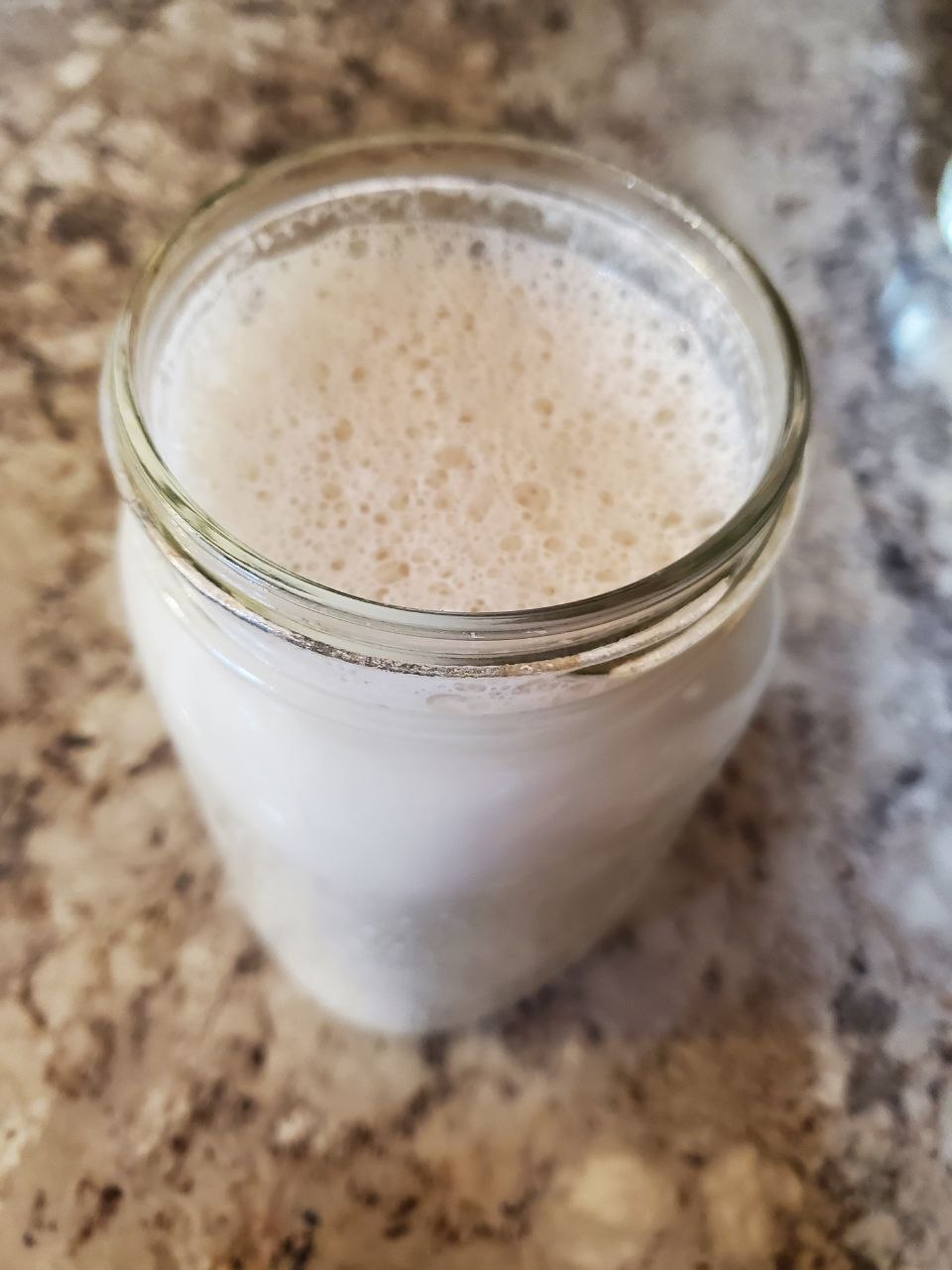
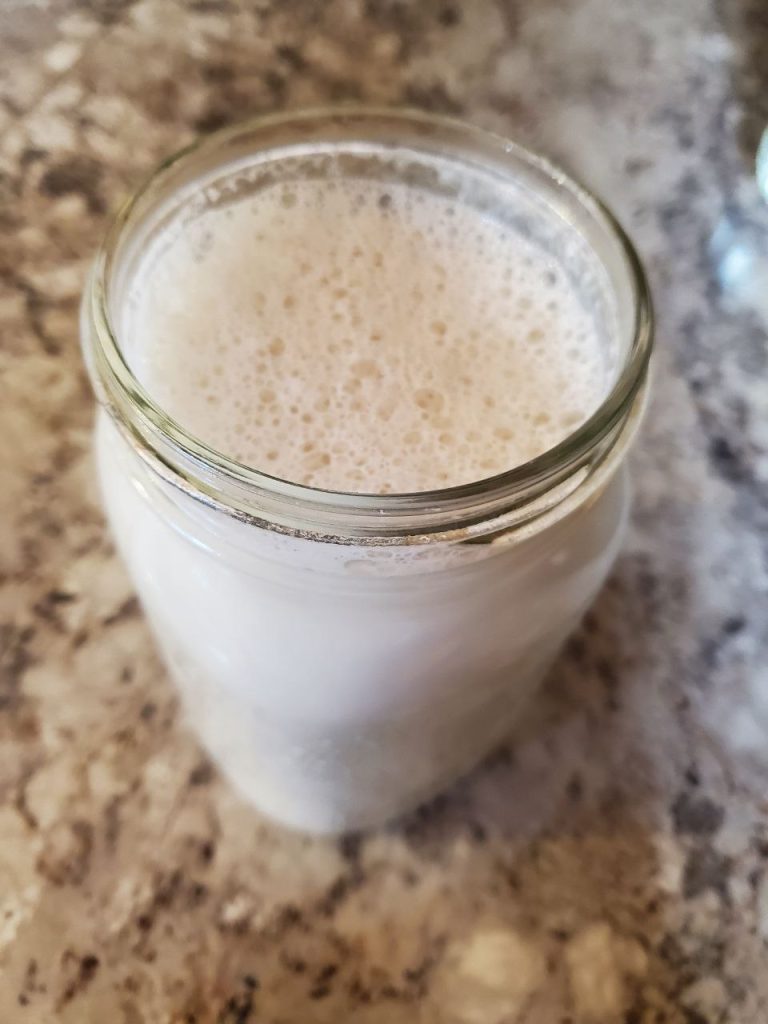
  4. Pour into a clean glass jar, cover (I use a plastic lid), and let ferment at room temperature for 24–48 hours. Taste after 24 hours — it should be pleasantly tangy. Mine usually takes 48+ hours, warmer water reduces the time.
  5. Once it reaches your desired sourness, refrigerate. Keeps 7–10 days. Use for elixirs, smoothies, salad dressings, or just on its own! Check out some of my elixirs here: (I often combine kefir and nut milk for elixirs and smoothies)
    https://mohrhealthyliving.com/search/?q=elixir&postTypes=post%2Cpage%2Cproduct

Notes:

  • Room temp water + lighter blending is the fastest and easiest method. It also gives you more usable pulp to use separately.
  • Optional upgrade: Soak cashews 4–8 hours first for creamier milk and extra phytic acid reduction. (note: Nylon strainer won’t capture much pulp).
  • Optional: Warm the milk gently to ~95°F before adding probiotics for faster fermentation. This also causes the nylon strainer to not capture much pulp.

For the leftover pulp: Mix with a little probiotic powder and ferment just like the milk. I consume it like porridge, or dehydrate for “flour.”

RECOMMENDED PROBIOTIC POWDER 

https://www.iherb.com/pr/now-foods-probiotic-10-powder-2-oz-57-g/55590?rcode=ATJ5704 

Several strains in this probiotic blend are known to produce B vitamins during fermentation. This specific mix is very good for this. Here’s a breakdown:

Strains in this blend that contribute to B vitamins:

  • Lactobacillus plantarum (Lp-115) — Strong producer of folate (B9) and can help with riboflavin (B2).
  • Lactobacillus rhamnosus (Lr-32) — Good for folate and some B6 activity.
  • Bifidobacterium longum (BI-05) — Notable for folate (B9) and riboflavin (B2) production.
  • Streptococcus thermophilus (St-21) — Often works synergistically with other strains to increase folate and B12 precursors.
  • Lactobacillus acidophilus (La-14), Bifidobacterium lactis (BI-04), and others — Contribute to overall B-vitamin synthesis, especially folate and sometimes B12-related compounds.

Fermentation with this blend should increase levels of B2 (riboflavin), B9 (folate), and to a lesser extent B6 and B12-related compounds. The exact amount depends on fermentation time, temperature, and the inulin/maple syrup you use as food for the bacteria.

The longer you ferment (within reason — up to 48+ hours), the more B vitamins the bacteria can produce, as they use the prebiotic (inulin) to grow and synthesize them.

About inulin vs maple syrup:

Inulin is an excellent prebiotic and works very well to feed the bacteria (similar to how Dr. Davis uses it in L. Reuteri yogurt). It may produce a slightly different tang than maple syrup or honey, but it’s cleaner because it doesn’t add extra sugars and contributes more to vitamin B benefits in this ferment. 

Warming the water first

Some say that warming the nut milk slightly (to about 90–100°F / 32–38°C) helps fermentation go faster and more reliably, although room temp water has always worked flawlessly for me.

  • Room temperature (especially in a cool house) can supposedly make it slow and inconsistent. Mine is consistent with room temp water, but does always take at least 48 hours to ferment.
  • Gentle warmth encourages the bacteria to wake up and start working faster.

You don’t need to heat it much — just warm enough to take the chill off.
 

Leave a Reply

Your email address will not be published. Required fields are marked *

This site uses Akismet to reduce spam. Learn how your comment data is processed.

You might also enjoy