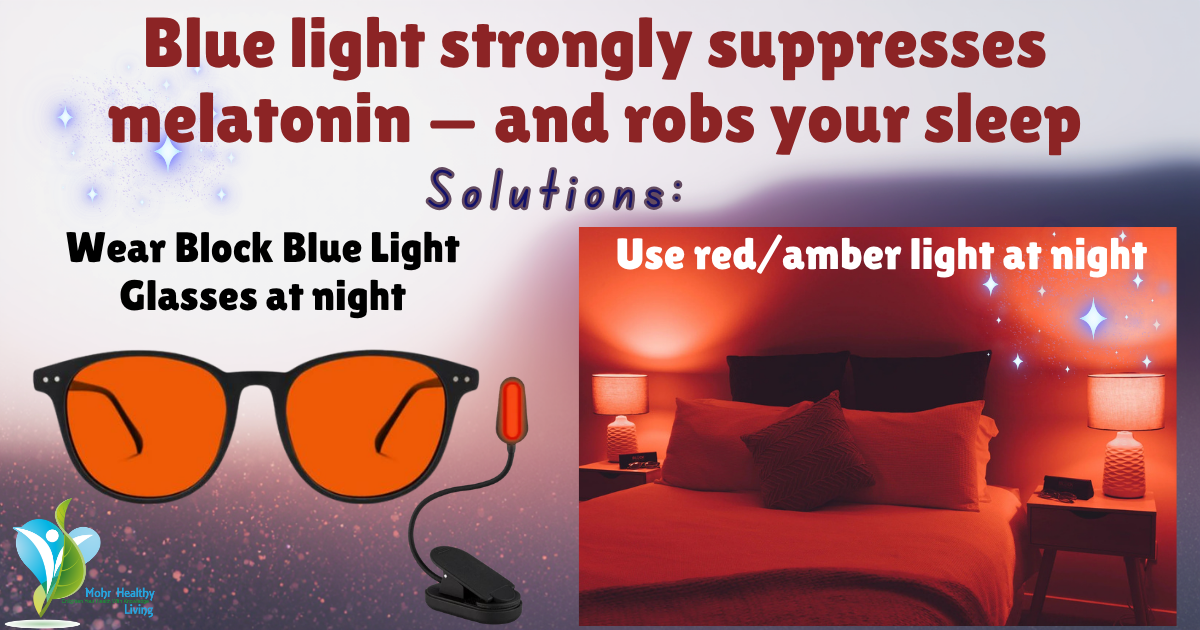
Blue light (especially the wavelengths around 460–480 nm) is the most disruptive type of light for sleep because it strongly suppresses melatonin — the hormone that signals to your body that it’s time to sleep.
- Melanopsin cells—special light-detecting cells that are most sensitive to blue light. These cells send a direct signal to your brain’s master clock (the suprachiasmatic nucleus), telling it “it’s daytime.”
- This delays the natural rise of melatonin in the evening, making it harder to fall asleep.
- It also shifts your circadian rhythm later, so you tend to feel more awake at night and more tired in the morning.
- Even relatively dim screens (phones, tablets, computers) can suppress melatonin if used in the evening.
This is why I wear yellow daytime glasses while on the computer in the daytime (they block a good portion of the harshest blue light), and red glasses after dark, which are even more important because the ones I wear block 100% of blue and green light from 400nm to 550nm—precisely the range most associated with disrupting natural circadian rhythms and nighttime light sensitivity. This makes them ideal for evening use when winding down and preparing for rest.
Red Lightbulbs and Amber Lighting in the Evening
This is one of the most effective (and underrated) things you can do.
Red and amber light have very little to no impact on melatonin production because they don’t activate the melanopsin cells in your eyes the way blue and white light do.
Benefits of using red/amber light in the evening:
- Allows melatonin to rise naturally as it should.
- Helps your body and brain wind down instead of staying in “day mode.”
- Reduces eye strain compared to bright white or blue-toned lights.
- Creates a calmer environment that supports the transition into sleep.
This is why using red lightbulbs (or amber bulbs) in the evening, especially in bedrooms and living areas after sunset, is so helpful.
While shopping for bulbs, I learned that cheap red bulbs from the hardware store often still leak small amounts of blue or green wavelengths that can quietly suppress melatonin. The higher-quality red bulbs that I use are specifically engineered with precise spectrums that block those disruptive wavelengths almost completely. They also last longer, don’t have that harsh “pinkish” cast, and create a much calmer, more natural evening environment. For me, the difference in how easily I wind down and stay asleep makes them worth the extra cost — especially since I only use them in my bedroom for short periods.
Block Blue Light Glasses vs. Cheap Amazon Ones – Is It Worth the Difference?
I’ve tried both over the years, and the quality gap is real. Here’s the honest breakdown:
- Blocking Power Cheap Amazon glasses often only block 10-30% of the most harmful blue light wavelengths (especially around 455-480 nm). Many are basically just tinted plastic with minimal real protection.
Block Blue Light glasses are lab-tested and block much higher percentages — up to 50%+ across the full blue spectrum for daytime ones, and nearly 100% of blue + green light with their red/amber nighttime lenses. That makes a noticeable difference for melatonin protection and eye comfort.
- Lens Quality & Clarity Cheap ones can have uneven tinting, distortion, or a cheap “rainbow” glare. Some barely do anything measurable when properly tested. Block Blue Light uses premium lenses that maintain clear vision without weird color shifts or headaches.
- Fit & Comfort (especially for reading glasses users like me) Cheap clip-ons are hit-or-miss — flimsy hinges, poor grip, easy to break. Block Blue Light clip-ons are sturdy, easy on/off, and the over-glasses options are excellent if you want full coverage.
- Durability Amazon cheapies often scratch easily or fall apart after a few months. Block Blue Light frames and hinges hold up much better for daily use.
Is it worth wearing the cheap ones at all?
Yes — some protection is better than none, especially if budget is tight or you’re just starting out. They can still cut down on some eye strain and give you a tiny bit of melatonin support in the evening.
But if you’re serious about protecting your sleep, reducing eye strain, and getting consistent results (like I do with less fatigue at the computer), investing in a good pair like Block Blue Light during their 25% off sale is absolutely worth it. The better blocking + comfort means you’ll actually wear them consistently.
RECOMMENDED BLUE BLOCKING GLASSES AND LIGHTS
Summer Sale 25% off
https://www.blockbluelight.com/?ref=https%3A%2F%2Fwww.instagram.com%2Fmohrhealthyliving%2F
Full Disclaimer: I’m an affiliate for these products I recommend, which means I earn a small commission if you purchase through my links—at no extra cost to you. Every penny helps keep this group free and the truth flowing.
Thank you for your support, and you can expect my full support in return. I only share what I personally use and/or trust. If you ever have questions please ask. 💜