The brain is one of the richest cholesterol-containing organs in the body — about 25% of the body’s total cholesterol is found there, even though the brain makes up only ~2% of body weight. Brain cells have especially high cholesterol needs for membrane fluidity, signaling, and repair compared to most other cells.
Cholesterol is also a key component of myelin — the insulating sheath around nerve fibers (axons). Myelin speeds up electrical signals between brain cells and prevents “short circuits.” When myelin wears down (demyelination), signals slow or get disrupted, which can lead to brain fog, coordination issues, numbness, or more serious problems (as seen in conditions like MS).
The brain also produces or regulates several important hormones and neurotransmitters, including serotonin, dopamine, melatonin, and oxytocin (often called the “love hormone”).
However, Dietary cholesterol from food does not easily cross the blood-brain barrier. The brain makes almost all of its own cholesterol locally and operates mostly independently. The liver makes cholesterol for the rest of the body.
So the common claim “eat cholesterol for brain health” is not directly accurate — the brain doesn’t pull dietary cholesterol across the barrier in meaningful amounts.
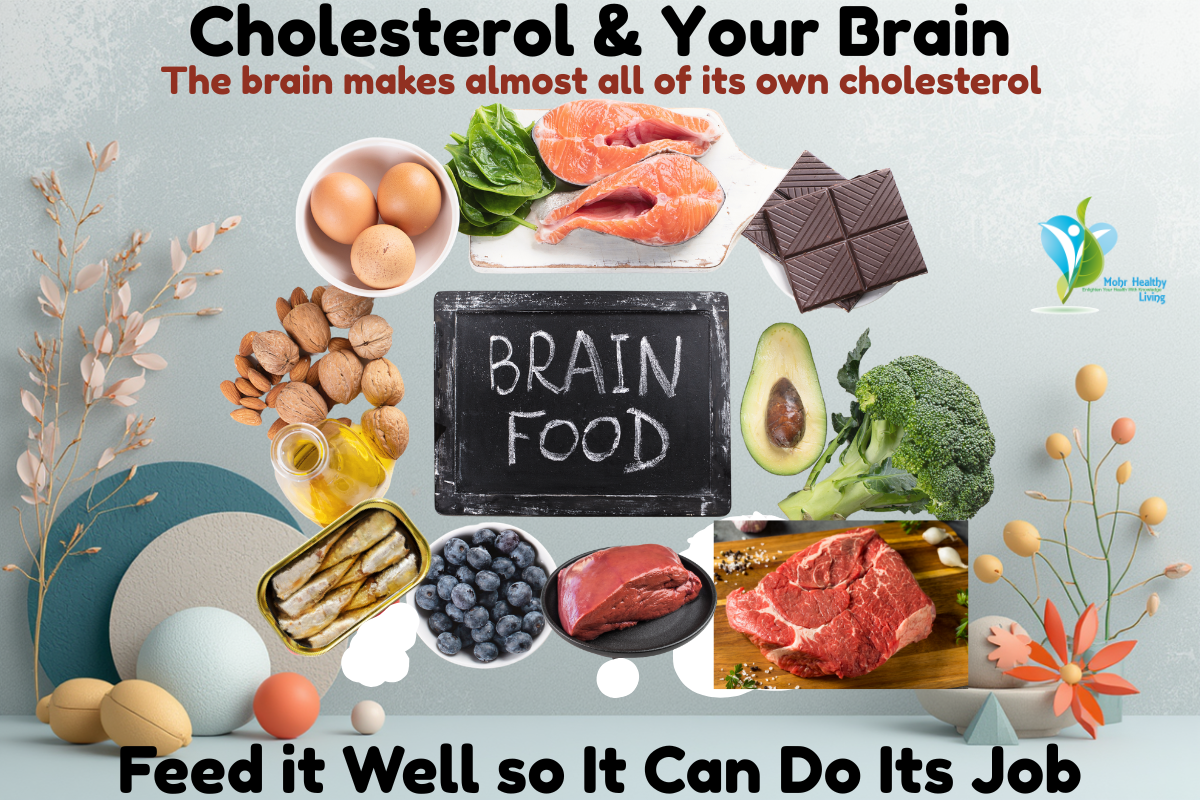
That said, Eating cholesterol-rich foods (eggs, liver, etc.) is still beneficial because they provide other key nutrients the brain loves:
- Choline (eggs, liver, lecithin) — essential for making acetylcholine, a key neurotransmitter for memory, learning, and focus.
- B vitamins (especially B12, folate, B6) — support methylation, nerve health, and energy production in brain cells.
- Vitamin D — helps regulate inflammation and supports overall brain cell function.
- Magnesium — critical for nerve signaling and protecting the brain from stress.
- Omega-3s (DHA/EPA) — major structural component of brain cell membranes and helps reduce inflammation.
Bottom line:
The brain is remarkably good at making its own cholesterol when it has the right building blocks and low inflammation. Focus on nutrient-dense real foods — eggs, liver, fatty fish, greens, and healthy fats — and keep seed oils and sugar low. That’s the most effective way to support healthy brain function and cholesterol balance over the long term.
What have you fed your brain today?
My favorite Fish Oil:
FISH OIL
iHERB: Discount Code – ATJ5704
Solgar https://www.iherb.com/pr/solgar-omega-3-epa-dha-triple-strength-950-mg-50-softgels/14918?rcode=ATJ5704
California Gold
https://www.iherb.com/pr/california-gold-nutrition-omega-800-ultra-concentrated-omega-3-fish-oil-kd-pur-triglyceride-form-90-fish-gelatin-softgels-1-000-mg-per-softgel/85180?rcode=ATJ5704
RECOMMENDED PRODUCT LIST:
https://docs.google.com/document/d/1n6Lm_LTMciv36IjarjuxU49sIRr45v98BXUDI1ueoDo/edit?usp=sharing


6 Responses
I’m curious about the fish oil vs. krill oil debate. Supposedly, krill oil is absorbed better, but the amounts of EPA & DHA listed on bottles of krill oil are always much less than those in fish oil. What are your thoughts on this?
Yes fish oil has more EPA & DHA, that’s the advantage of fish oil. Plus it’s more affordable.
Krill oil is cleaner because krill are so small and young, but the fish oil I use is well filtered of mercury etc.
I am curious to learn all I can about cholesterol but not the typical food aspect as I have FH (familial hypercholesteremia) meaning that I have a gene mutation resulting in very high levels of LDL. I am being heavily encouraged/advised to take statins, which I don’t want to but am seriously considering it as fear is taking hold. I have three young kids and want to be around for a long time. I’d appreciate any insights or knowledge you have gained to assist in my research quest please. I feel cornered at this point 🥺
I subscribe to The Townsend Letter and received one today that goes into depth about cholesterol and statins and gives many study results showing longevity is BETTER with higher total and LDL cholesterol, which is the opposite of what we’ve been told for decades. Please read this article…it’s quite enlightening! https://townsendletter.com/the-link-cholesterol-longevity-centenarians-statin-therapy/
Some researchers have noted that the subset of FH patients who develop early heart disease often also show markers of insulin resistance or metabolic syndrome, so addressing those may be more relevant than focusing solely on the LDL number.
Natural and nutraceutical approaches that have some data
These are not replacements for medical care in confirmed FH, but they are the options most discussed in natural-health circles and in some integrative reviews:
Plant sterols / stanols (2 g/day) – consistently lower LDL by about 10–15 % in FH studies, including in children. They work by blocking cholesterol absorption in the gut.
Soluble fiber (oat beta-glucan, psyllium, etc.) – modest additional LDL reduction (roughly 5–10 %).
Berberine – appears to increase LDL-receptor expression on liver cells (a different mechanism from statins). Some data show meaningful LDL drops; it also tends to help blood sugar and triglycerides.
Bergamot extract – ranked among the stronger nutraceuticals for LDL lowering in network meta-analyses.
Red yeast rice – contains monacolin K, which is chemically identical to lovastatin. It can lower LDL similarly to a low-dose statin, but that also means it carries similar potential side-effect risks and quality/purity varies widely between brands.
Niacin (vitamin B3) – can lower LDL and raise HDL, but flushing and other side effects limit long-term use for many people; outcome data when added to statins have been disappointing.
Other mentions in natural circles (Dr. Berg and similar voices): intermittent fasting, garlic, tocotrienols, and overall metabolic health support. Berg has specifically questioned the low-saturated-fat advice for FH and suggested focusing on insulin and particle quality rather than total LDL alone.
Broader perspective many natural practitioners emphasize
Cholesterol itself is not the enemy; it is essential for hormones, cell membranes, vitamin D, bile acids, and brain function. The concern is more about oxidized or small, dense LDL particles, chronic inflammation, endothelial damage, and clotting tendency. Advanced testing that looks beyond a standard lipid panel can be useful for decision-making:
ApoB (number of atherogenic particles)
LDL particle size/number
Lp(a)
Inflammatory markers (hs-CRP, etc.)
Coronary artery calcium (CAC) score (once age-appropriate)
Insulin resistance markers
Some people with FH who optimize these other factors and monitor closely feel more comfortable delaying or minimizing medication; others still choose pharmacologic therapy because the genetic risk is lifelong and cumulative.
Practical next steps many people in your situation take
Confirm the exact genetic diagnosis and current LDL/ApoB levels.
Get a full advanced lipid and metabolic work-up.
Work with a practitioner open to both conventional and integrative approaches (lipid specialist + functional/naturopathic-leaning clinician who understands FH).
Trial intensive lifestyle + selected nutraceuticals for a defined period while tracking labs and imaging if possible.
Re-evaluate risk vs. benefit of medication with updated data rather than fear alone.
You are not obligated to accept the first recommendation you receive. You are responsible for gathering the best information you can so you can make a decision you can live with—literally—for your kids’ sake.