Healthy Weight Tips
Healthy Weigh Tip #1 If I don’t wash and chop

Healthy Weigh Tip #1 If I don’t wash and chop

No maple. No oven. Just squash, garlic, herbs, and cheese.

PART 1- When the Brain Makes a Deal Food craving
11 Responses
I have MSM drops – can I use those rather than the powder? If so, what would be the measurement to add to CS?
I wouldn’t, that would cost a lot more too. I think everyone should be taking MSM daily anyway and should have the powder/crystals.
I just bought the Happy Body msm supplement. I look forward to trying this out. Thank you.
It’s my favorite brand. They make really good eye drops too and the creams they sell are phenomenal, really helped me out after knee surgery and now for pain that creeps up. Breaking my knee threw a lot of things out of whack.
Does the colloidal silver dry hair out?
No, it’s a lot easier on the hair than tap water. Colloidal silver is just water and 1 mineral (silver). I tend to use 1:1 ratio with distilled water for the liquid.
Hey Angie, I am going to get the MSM powder, but saw your comment and had to ask. Which creams did you use for your knee pain after surgery? I’m trying to determine which would be better between the CMP Max and the Hot Cream. I would be using it for my daughter’s knees (joint pain…not muscular) and my shoulder (torn labrum – SLAP level 2, frayed or possibly torn rotator cuff). It seems those two creams function differently, based on ingredients, and I’ve never tried any of their creams. I can see why both could be beneficial, but am trying to get the strongest options. (Or should I combine them and apply both at the same time?) I am most likely going to need surgery, but am dealing with a lot of pain while I am in the process of pursuing options. Any help or input would be great. 🙂
HI Angela, sorry I missed this comment until now. I tend to alternate between the 2 creams never both mixed. I feel like the hot cream works faster but the CMP Max lasts longer but it’s a band aid, temporary relief but at least not a toxic one. Shoulders can heal though, I’d be looking into red light therapy, I have links and one for a newer one FlexBeam that goes deeper than the LifePro products but of course costs more for the size of unit it is. It’s a medical grade device that Dr. Bergman recommends. Dr. B also has exercises for the shoulder, I think I only saw on INstagram, I can show you if you have Instagram
HAPPY BODY ORGANIC MSM USA
https://happybodystore.com/?aff=14
HAPPY BODY ORGANIC MSM CANADA:
https://happybodystore.com/shop-canada/?aff=14
RED LIGHT THERAPY – Top Pick (medical grade, recommended by Dr. John Bergman)
FlexBeam – https://rechargehealthas.sjv.io/qzYbOq
LIFEPRO
Vibration platforms, red light therapy, massagers, sauna blankets, PEMF and more.
DISCOUNT CODE – TNHL20 (20% OFF)
https://www.pjatr.com/t/TUJGR0lOSkJHSEVNTk5CR0ZNRUVO?url=https%3A%2F%2Flifeprofitness.com%2F
If I mix this up in an 8 oz spray bottle and use dayly(my daughter has horribly oily hair-it runs in the family) how long will it keep not refrigerated? I would assume quite a while using the CS?
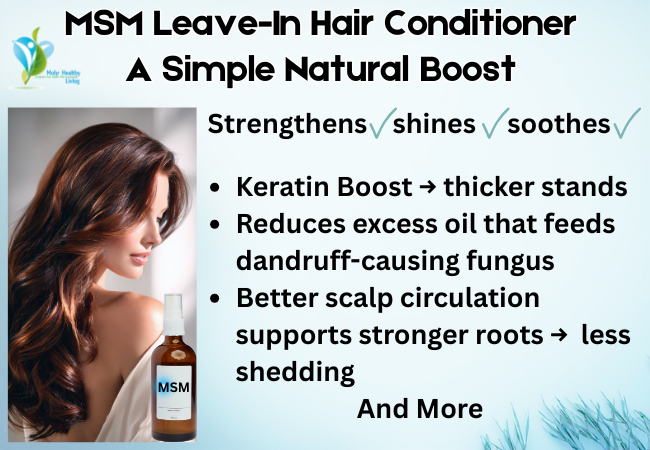
MSM will last a long time even in distilled water. It’s really good for the hair but not going to fix oily hair.
Oily hair often seems to run in families, but it’s more likely tied to shared lifestyle and dietary habits rather than being purely genetic. Common triggers include diets high in sugars, grains, and processed foods that spike insulin and hormones like androgens, leading to overactive oil production in the scalp glands, along with potential nutrient deficiencies such as low zinc from sources like red meat or shellfish, chronic stress elevating cortisol, poor sleep, or even over-washing that causes rebound oiliness. While the MSM and water DIY hair spray is a gentle, natural option that can make hair feel nicer and may help with texture, it won’t address the underlying causes of excess oil. To truly balance things, focus on cleaning up the diet by cutting out sugars and processed items while adding anti-inflammatory foods like berries, greens, and omega-3 sources; incorporate zinc-rich foods or consider a natural supplement if needed; try rinsing with diluted apple cider vinegar to balance scalp pH; manage stress through breathing exercises etc.; and aim for consistent sleep and hydration, as your body naturally self-regulates when these interferences are removed.
Hi Angie!
Thanks for all you do.
I made an Amanda Vollmer hair recipe with DMSO, but added pumpkinseed oil to it as well. Could I just add the MSM into that mixture instead of using another bottle of just MSM and water?
Thank you!
Eve