Protecting Beneficial Mouth Bacteria

Prebiotic/Herbal Oral Rinses

These are gentler alternatives to harsh antibacterial mouthwashes. Instead of nuking everything (good + bad bacteria), they help balance the oral microbiome by feeding the beneficial bugs or using herbs that selectively target pathogens while sparing the helpful ones. While I do use colloidal silver as an antibacterial mouthwash, I’ve started to alternate days with one of these recipes that support the good bacteria and overall mouth health. 

Why they rock:

  • They support nitrate-reducing bacteria (the ones that make nitric oxide for blood pressure and circulation).
  • Many herbs have natural antimicrobial power without the microbiome crash of alcohol or chlorhexidine.
  • They reduce inflammation and bad breath without drying out your mouth.

Simple DIY Oral Rinses

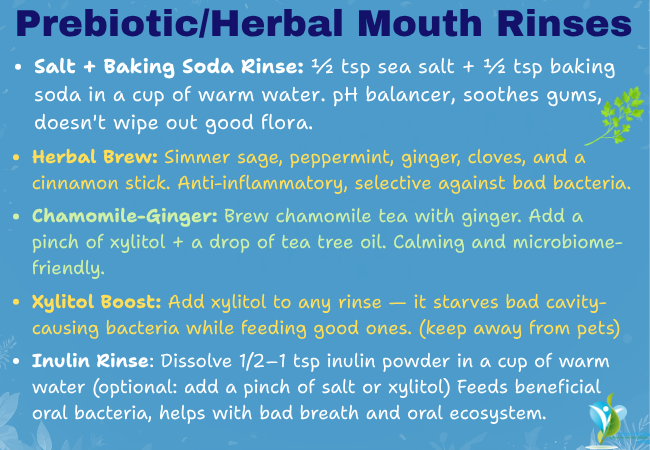
  • Salt + Baking Soda Rinse

    ½ tsp sea salt + ½ tsp baking soda in a cup of warm water. Basic pH balancer, soothes gums, and doesn’t wipe out good flora.

  • Herbal Brew (Anti-inflammatory & Selective)

    • 2 cups (500 ml) filtered water
    • 1 tsp dried sage
    • 1 tsp dried peppermint (or 2-3 fresh leaves)
    • 1 tsp fresh grated ginger (or ½ tsp dried)
    • 2-3 whole cloves
    • 1 small cinnamon stick (or ½ tsp ground cinnamon)

    Method: Bring water to a boil, add all herbs, reduce heat and simmer covered for 10-20 minutes. Let cool completely, strain, and use as a rinse. You can store in the fridge for 3–5 days easily. The boiling + strong antimicrobial herbs (sage, cloves, cinnamon) help preserve it.

    For Longer Storage: This recipe freezes really well. Make a big batch, cool completely, pour into clean ice cube trays, and freeze. Store cubes in a freezer bag. Lasts 2–3 months frozen. Just melt 1–2 cubes when needed.

  • Chamomile-Ginger Rinse (Calming & Microbiome-Friendly)

    • 1 cup (250 ml) hot water
    • 1 chamomile tea bag (or 1 tsp loose chamomile flowers)
    • ½ tsp grated fresh ginger (or ¼ tsp dried ginger powder)
    • ½ tsp xylitol (optional, for taste and bacteria-balancing)
    • 1 very small drop of tea tree oil (food-grade or essential oil — literally just one tiny drop, stir well)
      These amounts are gentle but effective. You can adjust slightly (more ginger for warmth, etc.), but start here. Always do a small taste test first to make sure it’s not too strong for your mouth.

    Method: Steep chamomile and ginger in hot water for 10 minutes. Strain, stir in xylitol and the tiny drop of tea tree oil. Let cool to room temperature before using. Can be stored 3 days max in the fridge in a clean glass jar. The tea tree oil gives it a bit more staying power than plain tea, but because it’s a lighter steep (not a hard boil with tough spices), it’s still best used within 3 days.

    For Longer Storage: Also freezer-friendly. Cool fully, freeze in ice cube trays. Once frozen, transfer to a bag. Lasts up to 2 months. Stir well after melting (tea tree oil can separate slightly).

  • Xylitol Boost:

    Add ½ to 1 teaspoon of xylitol per cup (250 ml) of rinse. This amount gives mild sweetness, helps starve bad bacteria, and supports a healthier oral pH without overpowering the taste. (keep away from pets)
    RECOMMENDED XYLITOL: (from birch)
    https://www.iherb.com/pr/health-garden-xylitol-all-natural-sweetener-16-oz-453-g/106074?rcode=ATJ5704
    Xylitol (from NON-GMO Corn)
    https://www.iherb.com/pr/now-foods-real-food-organic-xylitol-1-lb-454-g/115907?rcode=ATJ5704

  • Inulin For a simple prebiotic rinse

    Dissolve 1/2–1 tsp inulin powder per cup of warm water (add a pinch of salt or xylitol if you want). Swish for 30–60 seconds. You can also add it to herbal teas or existing mouth rinse recipes.
    Recommended Inulin:
    https://www.iherb.com/pr/now-foods-certified-organic-inulin-prebiotic-pure-powder-1-lb-454-g/95366?rcode=ATJ5704

These are gentle enough to rotate with colloidal silver days — feed the good bacteria on some days, antimicrobial support on others, so you’re not overdoing any one thing.

Tongue Scraping

Gentle daily tongue scraping is generally a net win. It removes the thick biofilm, dead cells, and food debris where bad anaerobic bacteria love to hide and cause bad breath/ inflammation.

Research shows regular (but not aggressive) scraping actually increases the proportion of good nitrate-reducing bacteria over time. It clears space so the beneficial ones can flourish better. Over-scraping or brushing too hard could temporarily disrupt things, but moderate scraping supports nitric oxide production. Scrape gently once a day (especially mornings).

Leave a Reply

Your email address will not be published. Required fields are marked *

This site uses Akismet to reduce spam. Learn how your comment data is processed.

You might also enjoy