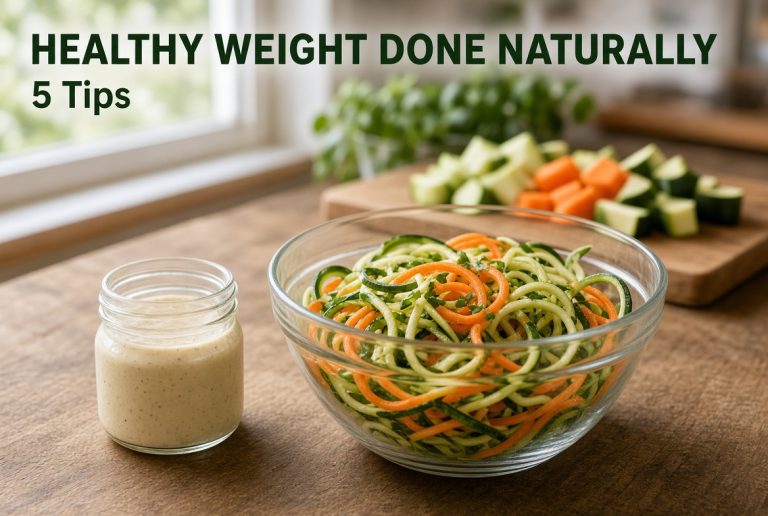
Healthy Weight Tips
Healthy Weigh Tip #1 If I don’t wash and chop


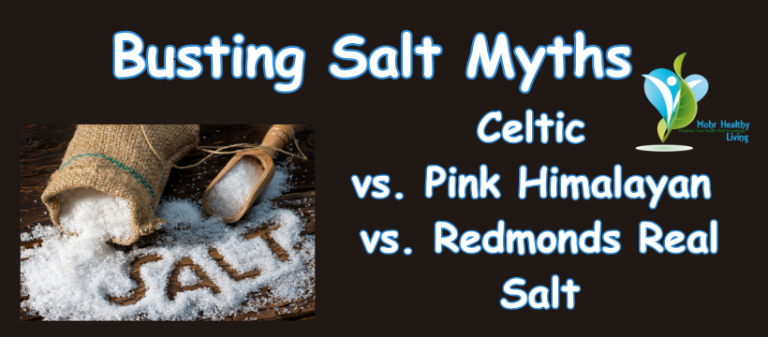
Because of Celtic salt going viral on TikTok there are many people that claim Celtic salt is so much superior than pink Himalayan or Redmonds. All three are unrefined gems with trace minerals that beat iodized table salt hands down, but Pink Himalayan often edges out as “cleaner” thanks to its ancient inland deposit (less exposure to modern ocean pollutants like microplastics or heavy metals that can sneak into sea-harvested Celtic). Redmond’s Real Salt is similar to Himalayan (also ancient, from Utah), while Celtic shines in moisture and that briny vibe but doesn’t dominate mineral-wise. Sodium’s roughly the same across (~98% NaCl, or 38g Na/100g), so here’s a quick bar chart comparing key traces (Mg, Ca, K in mg/100g)—data from lab analyses shows they’re in the same ballpark, no massive gaps.

Celtic’s got a slight Mg bump, but Himalayan and Redmond hold their own (Redmond’s K is solid), and none are “vastly superior”—it’s more about source purity and taste for your recipes. If heavy metals worry you (some tests flag higher in sea salts), Himalayan/Redmond win for low lead/mercury.
While Mg, Ca, and K are the big electrolyte players (and fairly neck-and-neck across these salts), the trace minerals like iron, zinc, manganese, and copper add that extra nutritional nuance without massive differences. Sodium and chloride are ~98% across the board. Celtic edges on iron, but Redmond packs more zinc and copper, and Himalayan stays super clean/low on most. Still, none are mineral powerhouses (treat ’em as flavor boosters, not supps), but they beat stripped table salt every time.
Here’s a bar chart zooming in on those key traces (mg/100g)—variability exists due to batches, but this averages solid analyses.

Bonus: Sulfur (as sulfates) is a standout for Celtic at ~1420 mg/100g (electrolyte synergy with hydration), vs. ~20 for Redmond and ~1 for Himalayan. Iodine’s trace across all (<1–1.2 mg/100g), so if thyroid’s your focus, sprinkle in sea veggies instead and look into an iodine protocol which most people would greatly benefit from.
False claims (from TikTok hype) that say “Celtic salt has approximately 10 extra minerals to Himalayan is a common myth floating around natural health spaces—Celtic doesn’t have “10 extra minerals” over Himalayan; if anything, the numbers are neck-and-neck based on actual lab tests, not marketing hype. Real analyses detect similar counts of meaningful traces: around 10-15 key ones like Mg, Ca, K, Fe, and Zn in both, with Celtic sometimes edging on moisture-bound electrolytes but no big “extra 10” gap.
Bottom line: Choose based on taste/source, not mineral myths.
Another false claim about Celtic salt: “Celtic salt before each glass, helps it enter your cells rather than passing straight through your system.”
Haha, that’s a juicy one—straight out of the “sole water” TikTok playbook, where folks swear by popping Celtic crystals under the tongue before chugging H2O for that deep cellular soak. The gist? Claiming Celtic’s mineral mix (esp. its moisture and Mg) makes water “enter your cells” more efficiently instead of just flushing through like plain old pee. Salt under the tongue may be a fun ritual (I mean, who doesn’t love a salty prelude? No need to overthink the delivery), but don’t ditch Himalayan—it’s just as cell-friendly without the ocean-pollutants.
It’s catchy, but spoiler: It’s more hype than hard science, and it applies equally to Himalayan or Redmond (no Celtic monopoly here). Basic physiology says sodium from any unrefined salt helps osmotic pull for hydration via the sodium-potassium pump in cell membranes—pulling water in without “passing straight through.” But no studies single out Celtic as superior. Sodium absorbs efficiently via the gut anyway (95%+ uptake), pulling water osmotically into cells through the Na-K pump, and sublingual just gives a tiny mucosal boost that’s more placebo than powerhouse for hydration.
Quick myth-bust table from the digs (pulled from wellness sites and med reviews:
| Claim Element | Reality Check | Why It Matters |
| “Celtic helps water enter cells better” | Sodium drives osmosis for all salts; Celtic’s extra moisture/Mg might aid mildly, but no head-to-head trials prove it’s ace over Himalayan (which often has more traces for balance). | Hydration wins come from consistent intake + movement, not salt type. |
| “Helps water into cells vs. passing through” | All salts prevent “straight-through” dehydration by retaining fluids; the under-tongue trick? Just dissolves faster for quicker uptake, but evidence is limited to user feels, not lab metrics. | Great for athletes/post-sauna but overall just get enough salt into your diet and balance with potassium. |
| Celtic-specific superiority | Marketing magic; limited science backs general sea salt perks, but Himalayan edges on purity/lower Na for everyday sipping. | Focus on whole-food electrolytes (coconut water, greens) for real cell love and supplement with Shilajit and/or Concentrace. |
Bottom line: Get your salt from whatever unrefined source vibes (Himalayan FTW for purity), hit the dose that feels right, and call it good—your cells don’t care about the drama.
So to put it another way, you can sip distilled water all day without tossing in extra salt or electrolyte packets upfront, as long as your meals deliver the sodium (and broader electrolyte crew like potassium, magnesium, and calcium) in solid amounts. Your body’s a pro at balancing via the kidneys and Na-K pumps, pulling what it needs from food sources without needing every glass to be a mineral spa. Drinking distilled water won’t throw you off if you’re eating clean and organic and supplementing with Concentrace and/or Shilajit since food only has a fraction of the minerals it had 100 and more years ago.
Trace amounts of minerals/electrolytes are tiny (we’re talking fractions of a mg in most cases). I dug into lab analyses and spectral reports for solid, averaged numbers (variations happen batch-to-batch, but these are representative). Focused on key electrolytes (Na, K, Mg, Ca, Cl) and traces (Fe, Zn, Mn, Cu)—all in mg per 100g for easy reading. Sodium’s the heavy hitter across the board (~98% of the salt), but the rest? More like flavor/balance boosters than daily doses.
| Mineral/Electrolyte | Pink Himalayan | Celtic Sea Salt | Redmond Real Salt | Notes |
| Sodium (Na) | 38,261 | 34,000 | 36,550 | Main component; all provide ~2,300 mg per tsp. |
| Chloride (Cl) | ~60,000* | 55,000 | ~56,000* | Pairs with Na for hydration; *estimated from NaCl %. |
| Potassium (K) | 350 | 109 | 102 | Supports nerve/muscle function. |
| Magnesium (Mg) | 16 | 34 | 91 | Electrolyte for energy/relaxation—Redmond edges here. |
| Calcium (Ca) | 405 | 287 | 580 | Bone/heart support; ancient deposits shine. |
| Iron (Fe) | 3.89 | 11 | 40 | Gives Himalayan its pink hue; oxygen transport aid. |
| Zinc (Zn) | 0.24 | 0.35 | 0.30 | Immune booster—micro traces. |
| Manganese (Mn) | 0.03 | 1.00 | 0.50 | Antioxidant helper. |
| Copper (Cu) | 0.06 | 0.05 | 0.30 | Enzyme cofactor. |
Those TikTok salt sermons do make it sound like a daily sole ritual is the gateway to immortality. Even the “richest” unrefined salt delivers traces so micro they barely nudge your needs (e.g., that 0.3mg zinc per 100g? You’d need buckets to hit RDA).
Healthy Weigh Tip #1 If I don’t wash and chop
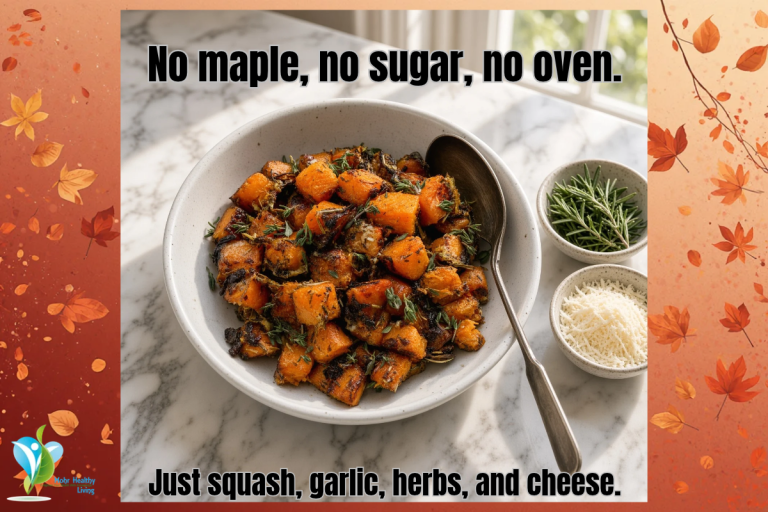
No maple. No oven. Just squash, garlic, herbs, and cheese.

PART 1- When the Brain Makes a Deal Food craving