(and a great starting toolkit for stress, migraines, and tension ones too)
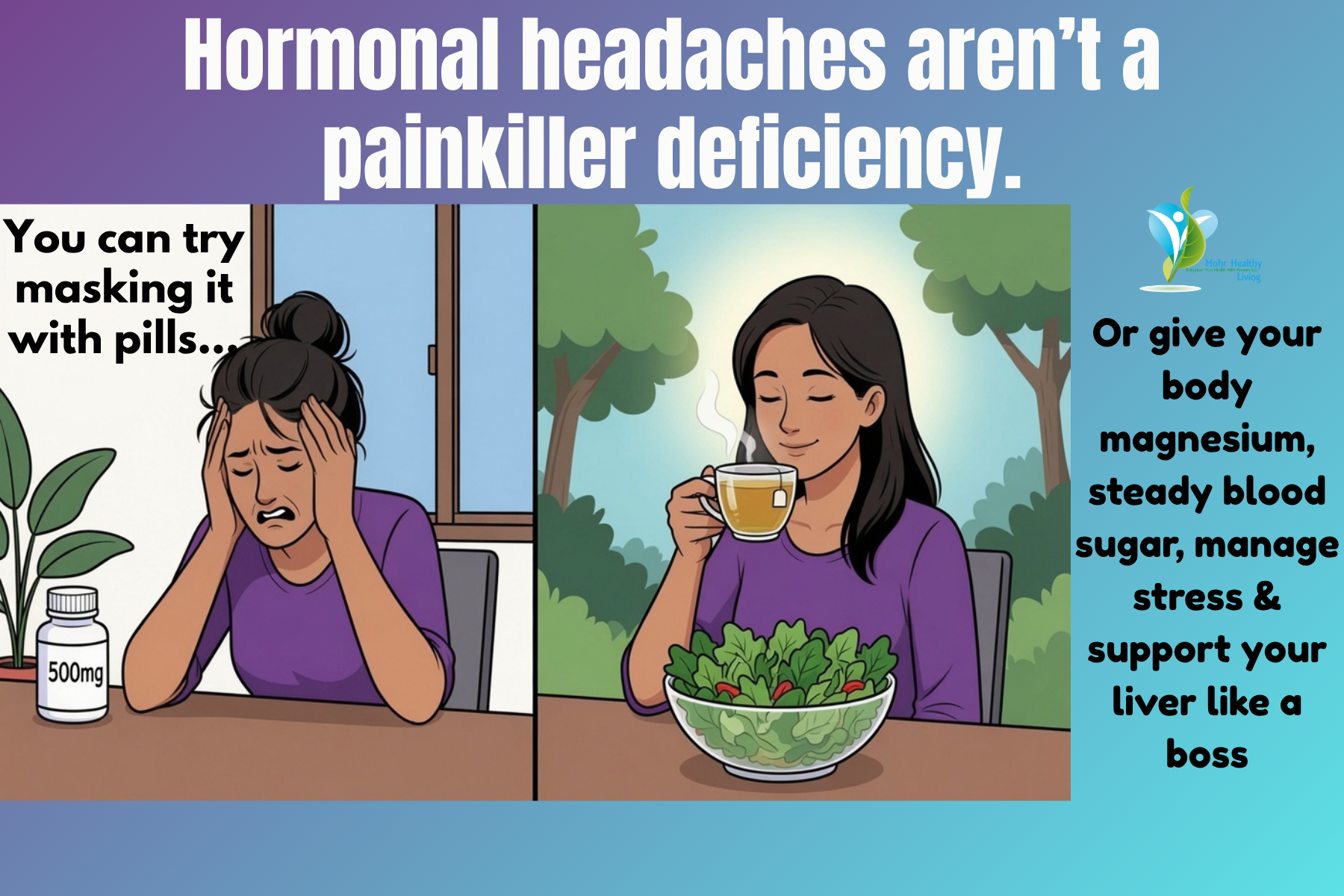
Hormonal headaches often flare up around cycle shifts, perimenopause, or when estrogen and progesterone are out of balance. Your body is trying to tell you the foundations need support — not that you’re deficient in ibuprofen.
These headaches are usually yelling about deficiencies, blood sugar rollercoasters, liver congestion, or hormones thrown off by stress — not a lack of painkillers. Here’s a practical starter kit worth playing with:
- Magnesium — especially powerful here because it helps regulate estrogen and progesterone while calming the nervous system that gets extra twitchy when hormones fluctuate. It calms the nervous system and smooths hormonal swings. Try glycinate or threonate before bed, or a topical spray for better absorption or if your gut’s sensitive.
- Stable blood sugar — crashes are a classic headache trigger. Pair protein + healthy fat at meals, maybe some chromium or berberine, and keep the carbs low, especially refined white carbs and sugar (especially in the evenings). Try a walk or other exercise after a meal with carbs.
- Liver love — Your liver is in charge of breaking down and clearing used hormones. When it’s congested, those hormones recirculate and can trigger headaches. Gentle daily support like milk thistle, dandelion root tea, bitter greens, castor oil packs, or bile-friendly foods (lemon/lime, artichoke, turmeric, ginger, radishes, apple cider vinegar, etc.) can work wonders. Gentle support makes a surprisingly big difference.
- Hydration + electrolytes — simple but massively effective. Add a pinch of sea salt or your fave electrolyte mix to water, especially when stressed or sweating.
- Stress/cortisol management — short walks, breathwork, or a quick vibration plate session to cut stress and inflammation.
Experiment, notice what clicks for you, and build your own toolbox. Your body’s usually happy to drop clues when you’re on the right track.
Adrenals
As we move toward menopause, the conversation often shifts to the adrenals. Your adrenal glands are two small walnut-sized glands that sit right on top of your kidneys. They play a major role in producing stress hormones like cortisol, and they help make and balance sex hormones — especially during the shift into perimenopause and menopause when the ovaries slow down. When adrenals are already depleted, that transition feels rougher.
What tends to wear adrenals down:
- Chronic emotional/psychological load — unresolved trauma, toxic relationships, or constant “high-alert” living that keeps the fight-or-flight switch flipped for years.
- Stimulant overuse — not just coffee, but constantly pushing with caffeine and caffeinated “focus” supplements, energy drinks, sugar, or even too many intense workouts without recovery.
- Nutrient drain — adrenals need plenty of vitamin C and B vitamins. Long-term low intake (common with processed diets) can leave them struggling.
- Gut infections or hidden inflammation — things like parasites, SIBO, or chronic low-grade gut issues quietly tax the adrenals because the body sees them as ongoing threats.
- Environmental toxic load — heavy metals, mold, or constant exposure to chemicals that force the adrenals to work overtime on detoxification. Avoid exposure to endocrine disruptors (plastics, conventional personal care products, sales receipts etc.) and support thyroid health with iodine — simple steps that helped me move through hot flashes quickly with diet, movement, and consistent iodine.
When you support your hormones at the root instead of masking the pain, you’ll often notice fewer headaches and more steady energy throughout your cycle.
So the next time a hormonal headache shows up, pause before reaching for the pill bottle. Ask yourself: What small change can I make today to give my body what it’s really asking for? Every step you take to address the real stressors and deficiencies is a step toward feeling better — not just in your head, but in your whole body.